



Beyond oil & gold: sector rotation from AI-centric to energy-centric
April 8, 2026 at 6:11 AM
The vulnerability of the Strait of Hormuz which is handling 20% of global oil flows and a massive share of Qatar’s liquified natural gas (LNG) exports (also circa 20% of global supplies), is laying bare the fragility of fossil fuel dependency for both Asia and Europe. While this presents an immediate inflationary shock, the wholesome, long-term consequence is the hyper-acceleration of the energy transition.
The new phase of the development of next-generation infrastructure
Capital is fleeing vulnerable geopolitical regions and pouring into domestic energy security. As long as the US/Israel vs. Iran conflict is present, an ongoing and arguably secular bull market in grid modernization, energy storage solutions, and nuclear power infrastructure may attract new buyers to this sector.
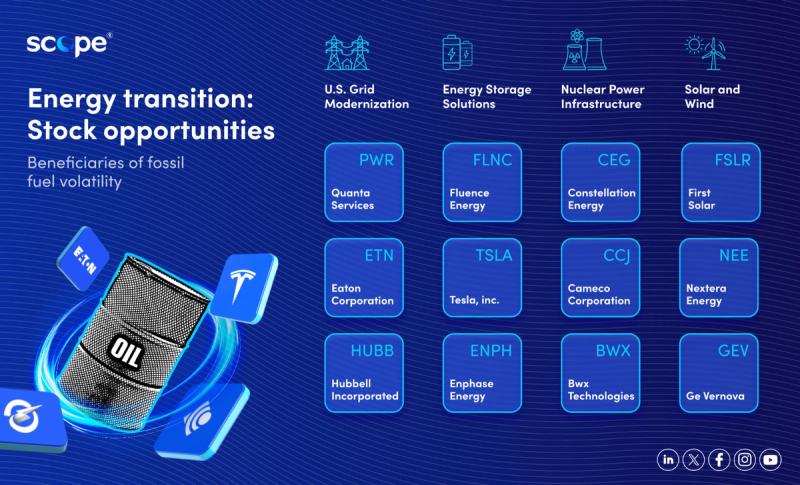
Such an environment heavily incentivizes capital flows into domestic infrastructure, baseload clean power, and energy independence. Below is a curated list of companies well-positioned to benefit from the hyper-acceleration of the energy transition across the above-mentioned categories.
U.S. Grid Modernization
The transition to renewables is bottlenecked by the grid. Interconnecting new wind and solar, handling the load of electrification (EVs, data centers, heat pumps), and protecting against extreme weather require trillions in grid upgrades.
Quanta Services (PWR): A premier specialized contractor providing infrastructure solutions for the utility industry. If the U.S. is going to build thousands of miles of high-voltage transmission lines and upgrade local distribution grids, Quanta is the company doing the physical labor and engineering. They boast a massive, multi-year backlog.
Eaton Corporation (ETN): A global power management company that provides critical electrical components (transformers, switchgear) necessary for grid hardening and modernization. Eaton is a direct beneficiary of the "electrify everything" megatrend.
Hubbell Incorporated (HUBB): Focused heavily on utility solutions, Hubbell manufactures products needed for the electrical grid. As utilities scramble to replace aging infrastructure and build out microgrids to handle local shocks, Hubbell sees sustained demand.
Energy Storage Solutions
Intermittent power sources (solar and wind) cannot replace fossil fuels without utility-scale and residential energy storage to balance the grid when the sun isn't shining or the wind isn't blowing.
Fluence Energy (FLNC): Originally a joint venture between Siemens and AES, Fluence is a pure-play bet on utility-scale energy storage products and services. As raw material costs for batteries stabilize, their massive backlog of grid-scale storage projects offers significant upside.
Tesla, Inc. (TSLA): While largely known as an automaker, Tesla’s Energy Generation and Storage division (specifically its utility-scale Megapack business) is growing at an extraordinary rate. Megapacks are being deployed globally to stabilize grids and replace fossil-fuel peaker plants.
Enphase Energy (ENPH): A leader in microinverters and residential battery systems. In a world of energy insecurity, homeowners and businesses increasingly want decentralized, "island-able" power systems to protect against blackouts and price spikes.
Nuclear Power Infrastructure
The energy crisis has proven that grids need stable, high-capacity, zero-emission baseload power. Nuclear energy has seen a massive renaissance in public and bipartisan political support, recognized as vital to both energy security and powering the AI/data center boom.
Constellation Energy (CEG): The largest producer of carbon-free energy in the U.S. and the largest operator of nuclear fleets. Constellation is highly positioned to benefit from production tax credits and long-term power purchase agreements (PPAs) with major tech companies seeking 24/7 clean power for data centers.
Cameco Corporation (CCJ): One of the world’s largest uranium producers. Western nations are actively trying to decouple their nuclear fuel supply chains from Russia and its allies. Cameco, based in Canada, is the premier geopolitical safe-haven asset for uranium mining and fuel conversion services.
BWX Technologies (BWXT): A specialty manufacturer of nuclear components. They supply the U.S. government (e.g., naval reactors) but are also deeply involved in the development and manufacturing of commercial Small Modular Reactors (SMRs), which represent the next generation of scalable nuclear power.
Solar and Wind
While these are mature technologies, a shock to oil and LNG prices makes the levelized cost of energy (LCOE) for wind and solar highly attractive, accelerating corporate and utility deployments.
First Solar (FSLR): The largest U.S.-domiciled solar panel manufacturer. Crucially, First Solar uses a thin-film cadmium telluride technology, bypassing the polysilicon supply chains dominated by China. This makes them a major beneficiary of domestic manufacturing incentives and insulated from geopolitical trade wars.
NextEra Energy (NEE): A uniquely positioned company. It operates a regulated utility (Florida Power & Light) providing stable cash flow, alongside NextEra Energy Resources, the world's largest generator of renewable energy from the wind and sun. They are also heavy investors in battery storage.
GEVernova (GEV): Spun off from General Electric as a standalone energypure-play, this company is a powerhouse in wind turbines (both onshore and offshore) and grid electrification equipment. By focusing solely on energy transition technology, it is a streamlined way to play the massive global backlog in wind deployment.
Stock opportunities beyond oil and gold
Beyond gold and into the main chapter of the 21st century
Navigating these rapid rotations from fear-driven safe havens like gold and silver to future-facing growth sectors requires a modernization of how we interact with the markets. The addiction to outdated systems, such as the aptly projected thesis that the future of capital preservation lies with investments in gold, is a liability in these rapidly transforming and turbulent times.
While gold has been gathering headlines for over 25 years and has rallied 1500% since 2001 in the aftermath of the September the 11th attack in the US, the beginning of the end of the Iranian conflict may mark the end of the safe-haven allure of the yellow metal during the long start of the 21st century.
This material is a marketing communication provided for informational purposes only and does not constitute investment advice, recommendation, or an offer or solicitation to trade. Any market analysis, opinions, or forecasts are based on publicly available information and do not constitute independent investment research. Past performance and forecasts are not reliable indicators of future results. Scope Markets accepts no liability for any loss arising from reliance on this information.
Related Articles

Technical Scope: No changes in technicals, or fundamentals!
By Mohanad Yakout
Welcome to today’s edition of The Technical Scope, your twice-weekly guide to the evolving landscape of global markets through the lens of technical a...
Read More
Market Analysis
Technical Analysis
Swing Trading

Technical Scope: The Strong Dollar Effect
By Mohanad Yakout
Welcome to today’s edition of The Technical Scope, your twice-weekly guide to the evolving landscape of global markets through the lens of technical a...
Read More
Market Analysis
Technical Analysis

Technical Scope: Markets stuck in a sideways range
By Mohanad Yakout
Welcome to today’s edition of The Technical Scope, your twice-weekly guide to the evolving landscape of global markets through the lens of technical a...
Read More
Market Analysis
XAUUSD
USDJPY
US 500
Trend Following
Technical Analysis
Swing Trading
Support And Resistance

Stop Trading the News, Start Trading the Oil Cargo
By Victor Golovtchenko
When you see a Reuters headline that tells you OPEC+ is "completing the series of symbolic quota hikes," what exactly are you trading? When the Irania...
Read More
Market Analysis
Oil
US Oil
UK oil
WTI
Brent Crude
Trading

Technical Scope: Markets Mixed Ahead of Key Developments
By Mohanad Yakout
Welcome to today’s edition of The Technical Scope, your twice-weekly guide to the evolving landscape of global markets through the lens of technical a...
Read More
Market Analysis
XAUUSD
USDJPY
US 500
Trend Following
Technical Analysis
Swing Trading
Support And Resistance
Technical Scope: Key Levels & Market Outlook ahead of NFP Data
By Mohanad Yakout
Welcome to today’s edition of The Technical Scope, your twice-weekly guide to the evolving landscape of global markets through the lens of technical a...
Read More
Market Analysis
Chart Patterns
Candlestick Patterns
Day Trading
GBPUSD
Gold
NFP
Non Farm Payrolls
EURUSD
Oil
S&P 500
US 500
USDJPY
XAUUSD
The state of Hormuz: oil price action is not the story
By Victor Golovtchenko
Another month, another week, another batch of headlines, and new all-time highs for US stock markets might not be the news one awaits when they see th...
Read More
Market Analysis
Oil
WTI
Brent Crude
Strait of Hormuz
UAE
OPEC
Technical Scope: Key levels to watch for on JPY pairs
By Mohanad Yakout
Welcome to today’s edition of The Technical Scope, your twice-weekly guide to the evolving landscape of global markets through the lens of technical a...
Read More
Market Analysis
Technical Analysis
Day Trading
Chart Patterns
EURUSD
GBPUSD
Crude Oil
S&P 500
Gold

Beyond oil & gold: mapping forex markets in turbulent times
By Victor Golovtchenko
The financial world has understandably been captivated by the extraordinary surge in gold to above $5,000 in the first weeks of 2026 and the looming t...
Read More
Market Analysis
forex
Oil
Gold
Straight of Hormuz
Iran